A microwave oven is one of the most useful appliances in a modern kitchen. It helps with quick reheating, defrosting, cooking, and preparing snacks in minutes. However, one of the most common problems people face is that the microwave runs normally, the light turns on, and the turntable rotates, but the food remains cold. If your microwave oven is not heating, it is important to understand that the problem may be internal and should not be ignored.
In many cases, a microwave not heating issue is linked to the magnetron. The magnetron is the main component responsible for producing the heat that cooks or warms food. When it becomes weak, damaged, or burnt out, the microwave may appear to work but will not heat properly. This is a technical component and should only be checked by a trained microwave repair technician.
Another common reason is a faulty high-voltage diode, capacitor, or transformer. These parts support the heating system inside the appliance. If any of them fail, the microwave may stop heating, make unusual humming sounds, or switch off during use. Since microwaves store high electrical voltage even after being unplugged, opening the appliance without proper knowledge can be dangerous.
Door switch problems can also prevent a microwave from heating. A microwave oven has safety switches near the door latch. If the door is not closing properly or the switch is damaged, the appliance may run without starting the heating process. You may notice that the display works, but the microwave does not heat food as expected. A technician can inspect the door lock, latch, and switch assembly safely.
Sometimes, the issue may be related to a blown fuse or damaged internal wiring. Power fluctuations, overheating, continuous use, or moisture can affect internal electrical parts. If your microwave oven suddenly stops heating after a power cut or voltage fluctuation, it is better to avoid repeated attempts to use it. Continuing to operate a faulty microwave can worsen the damage and increase repair costs.
Before booking microwave repair service, you can perform a few basic checks. Make sure the microwave is connected properly, the door is fully closed, and the power socket is working. Also check whether the appliance is set to the correct cooking mode and power level. If these basic checks do not solve the issue, professional inspection is the safest option.
A trained technician can diagnose whether the problem is related to the magnetron, diode, fuse, door switch, control board, or wiring. Professional microwave oven repair helps you avoid unnecessary replacement costs and can restore the appliance’s performance when the issue is repairable.
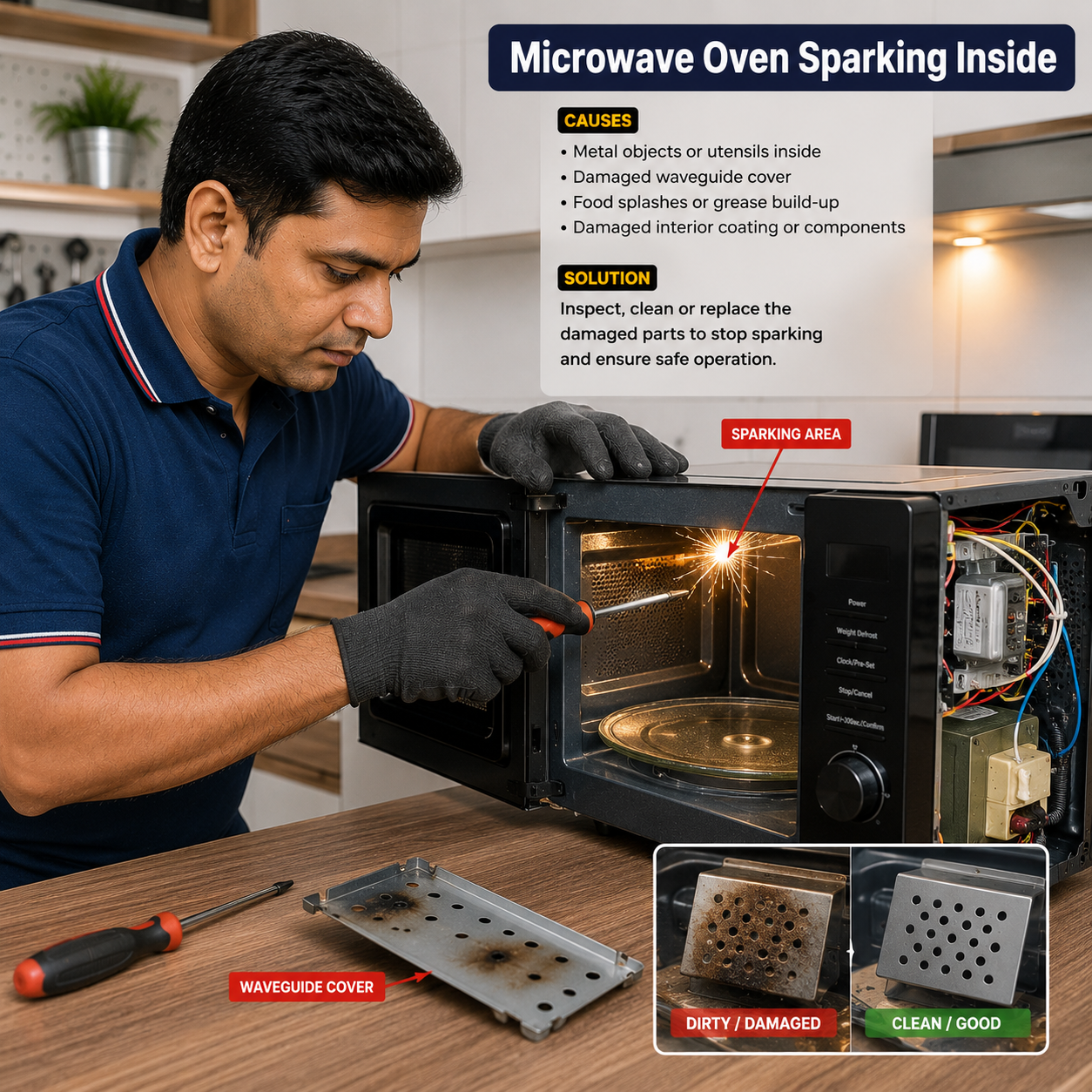
If your microwave oven is not heating, sparking inside, making loud sounds, or showing display errors, do not delay the inspection. Timely doorstep microwave repair can help keep your kitchen routine smooth and prevent a small technical issue from becoming a major appliance failure.